
Scholarship Recipient: How Passive House Training Gave One Builder the Edge in Energy-Efficient Construction
Luke Dunn has never been interested in doing things the ‘standard’ way. Long before energy efficiency became a mainstream concern, he was already asking the question most homeowners care deeply about: Why are houses still too cold in winter, too hot in summer, and costing a fortune to heat?
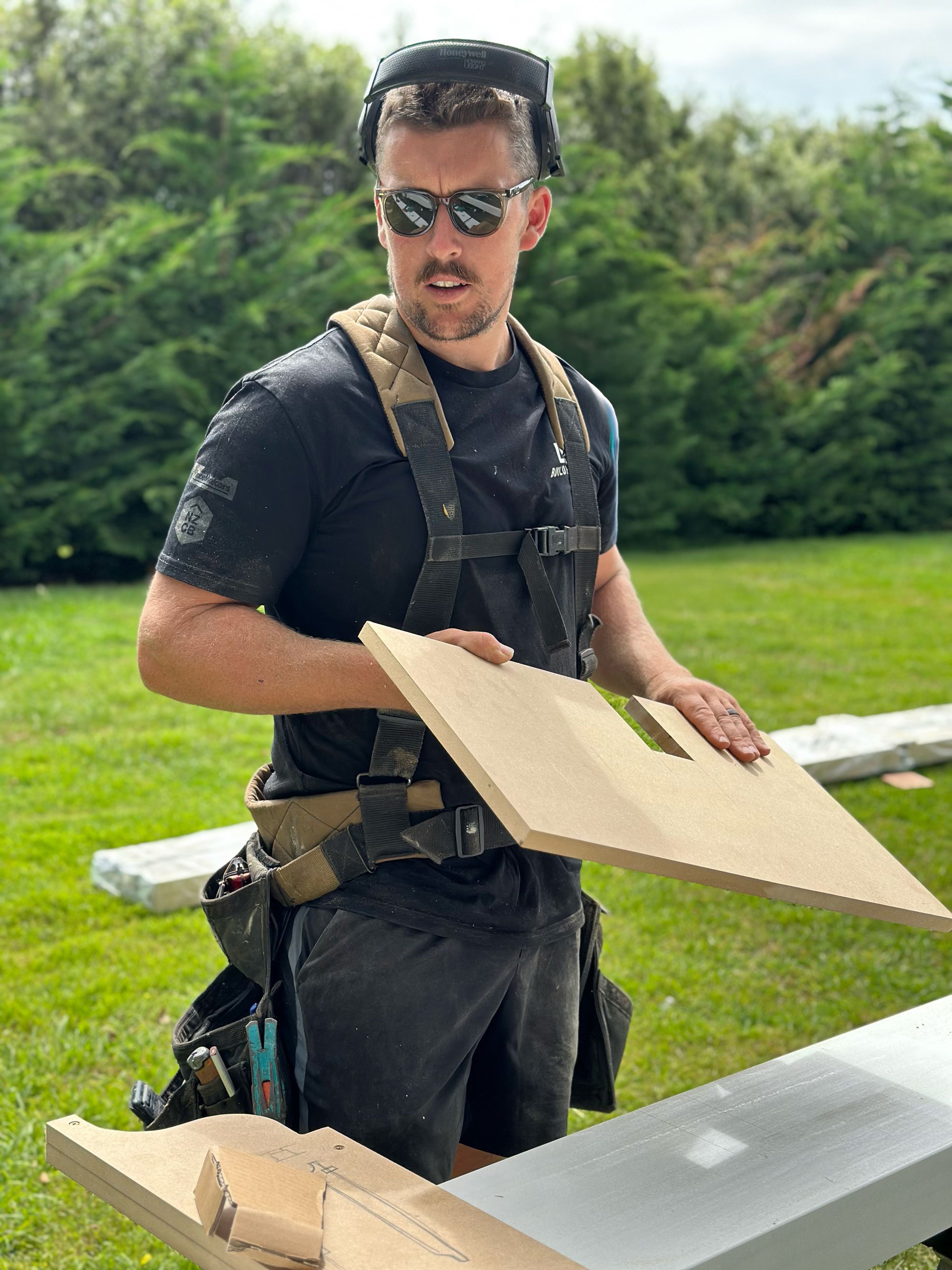
That question led the Director of LWD Builders & Co (New Zealand Certified Builders Member) to apply for a Construction Growth Foundation (CGF) scholarship and complete intensive Passive House training through Sustainable Engineering at Pro Clima’s Auckland offices.
‘An architect I’d worked with had used CGF support for further study and spoke highly of it,’ Luke recalls. ‘I was going to invest in my education regardless, and if I could get some financial backing, that was a bonus.’
Beyond the Building Code: When “Good Enough” Isn’t Good Enough
For Luke, Passive House training wasn’t about chasing certification for its own sake. It aligned directly with where he’s taking his business: healthy homes, energy-efficient construction, and low-toxic living environments.
‘I’ve always pushed things above the standard way of building,’ he explains. ‘With power costs climbing and people living in homes that underperform, I believe houses should not just look good; they should perform well too.’
The training delivered exactly what Luke needed: practical, mathematical precision. He learnt to calculate U-values and R-values with confidence, identify thermal bridging before it becomes a problem, assess condensation risks accurately, and understand the physics of heat transfer in real-world applications.
‘The maths equations for working out U-value, then R-value, and air change calculations, those were real lightbulb moments,’ Luke says. ‘Being able to truly understand with actual numbers how to determine the true R-value of all building materials changes everything.’
From Theory to Timber: Applying Knowledge on Real Projects
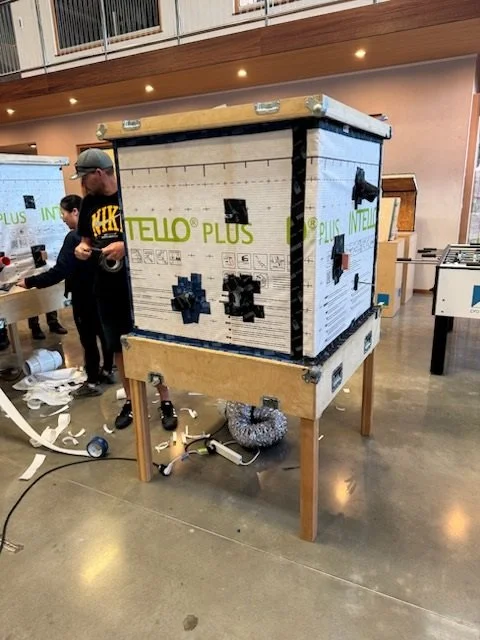
That knowledge hasn’t stayed theoretical. Luke has already applied his Passive House training to a Structural insulated panels (SIPs) panel show home for a local manufacturer, and LWD Builders & Co is now in discussion about larger SIP panel homes in 2026, including one high-performance build and another targeting full Passive House certification.
The market is responding. Clients are asking different questions now about airtightness, thermal performance, and long-term running costs. Luke’s answer? He aligned with a local SIP panel manufacturer that fits squarely into the high-performance and Passive construction space.
‘Paying a bit more upfront to achieve higher insulation, better windows with superior performance, and the cost of making a house properly airtight will, in the long term, deliver a home that costs minimal to heat or cool,’ Luke explains. ‘That’s the value proposition homeowners are starting to understand.’
Raising the Bar Across the Team
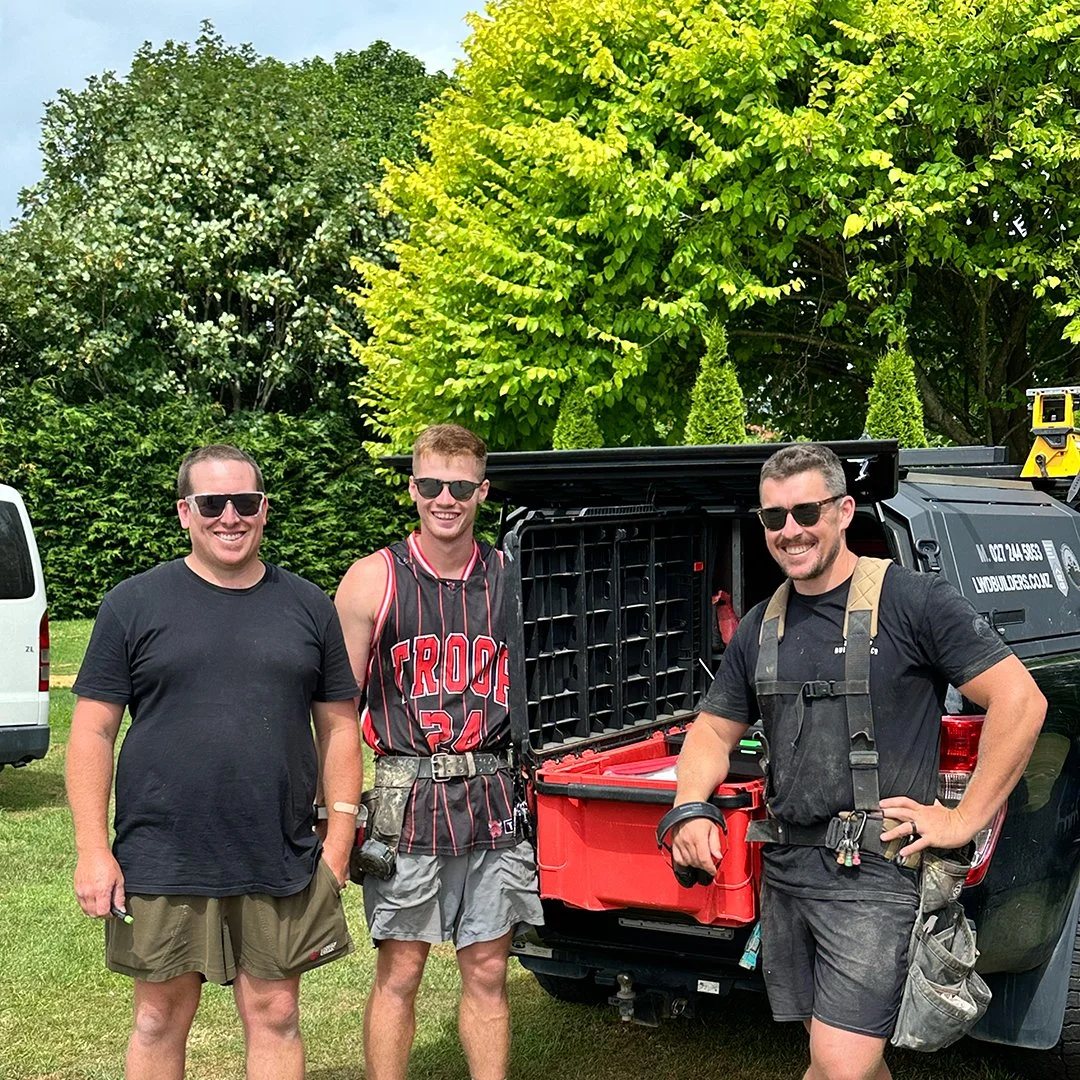
The impact extends beyond Luke’s own capabilities. One of his main contractors completed the Passive House course alongside him, embedding the knowledge throughout the business.
‘In high-performance buildings, getting the house as airtight as possible is critical,’ Luke emphasises. ‘That responsibility sits directly with us, the tradies on site. This training has absolutely lifted our standard of workmanship and quality control across all projects.’
It’s changed conversations on site too. The team now talks about how houses perform, not just how they look. That shift in mindset—from aesthetics to actual outcomes—is what separates high-performance builders from the rest.
Standing Out in a Competitive Market
Luke’s vision for the next three to five years is clear: establish LWD Builders & Co as a recognised force in high-performance and Passive construction in the Bay of Plenty.
Currently, only a handful of builders in Tauranga hold the same Passive House certification, giving Luke a significant competitive edge in a market where performance standards are only heading in one direction: up.
‘Building to achieve Passive, or close to it, is well above the current Building Code standard,’ he notes. ‘There will be many upgrades to regulations before they even get close to what we’re already delivering.’
The Confidence to Lead
Perhaps the most significant outcome? Confidence.
‘The scholarship has given me confidence to speak about Passive House and high-performance construction with authority,’ Luke reflects. ‘It’s one thing to believe in building better. It’s another to have the technical knowledge and certification to back it up.’
When asked about the toughest part of the training, Luke doesn’t hesitate: ‘Sitting in a classroom for 40 hours.’ He laughs, but there’s pride there too. The in-depth learning about physics and heat transfer wasn’t easy, but that’s precisely what made it valuable.
A Changed Trajectory
Looking back five years from now, what will this scholarship mean?
Luke’s answer is direct: ‘Doing the course changed the direction of my business.’
That’s exactly the kind of outcome CGF exists to support: practical capability development, professional confidence, and long-term impact that lifts the entire construction sector.
For other builders considering applying for CGF scholarship support, Luke’s advice is simple: ‘It’s a great asset to have up your sleeve when looking at further education and training. And it’s given me reason to keep looking for more training opportunities.’
Better skills. Better homes. A stronger construction sector.