
What does it take to transform how an entire industry builds communities? For Irene Boles, the answer starts with asking the right questions and listening deeply to the answers.
An architectural designer and educator based in Ōtautahi Christchurch, Irene brings over a decade of experience across architectural design, teaching, and community-led urban development. Now, supported by a CGF scholarship, she is completing a PhD at Auckland University of Technology, research that could reshape how New Zealand builds medium-density housing for generations to come.
Shaped by the Shakes
Irene's path into this field wasn't planned in a boardroom, it was forged in the rubble of Christchurch's post-earthquake recovery. Working on community-led regeneration projects in the years following the Canterbury earthquakes, she witnessed something that would come to define her entire career: that the most meaningful built environments are shaped by the people who live in them.
"Those experiences demonstrated how meaningful engagement and collective action can transform neighbourhoods," she reflects.
That conviction deepened further in 2016, when Irene encountered two collective housing advocates trying to develop medium-density housing in New Brighton, on three sites that were, at the time, nothing more than car parks. Together with her architecture students, she launched a collaboration that would span several years, creating a course called Design for Social Sustainability and developing proposals that experimented with medium-density living, incremental construction, and alternative ownership models.
Fast-forward nine years, and those three car parks are now residential developments, affordable, medium-density homes delivered by Kāinga Maha (Te Paka Maru). "This has been an absolutely outstanding outcome of the advocacy we were part of years ago," says Irene. For her, it is living proof that patient, community-led process produces real results.
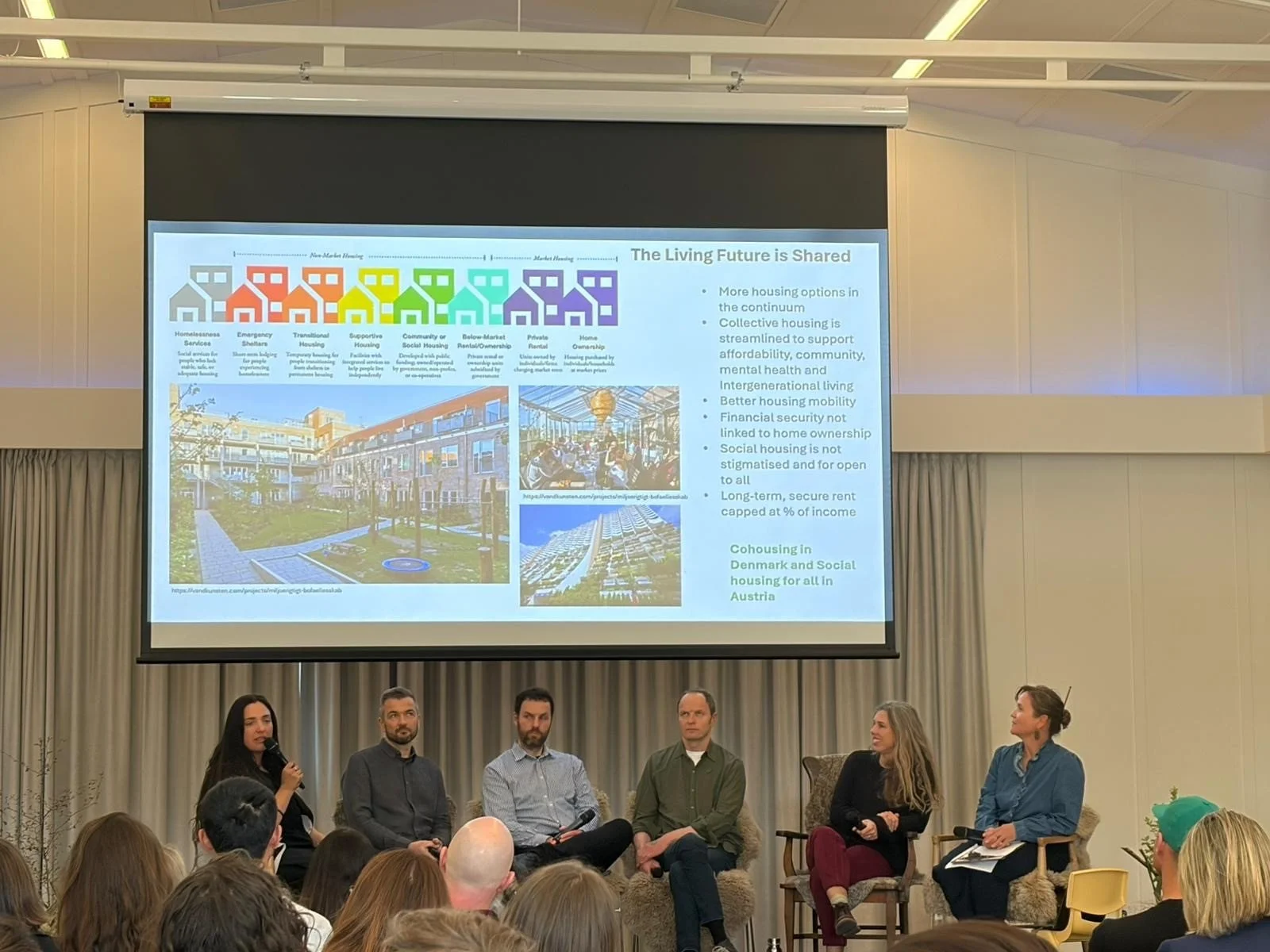
Irene Boles presenting at a conference
Research That Builds Better
Irene's PhD at AUT focuses on how participatory design and community engagement can improve the delivery of medium-density housing across Aotearoa. Guided by Professor Amanda Yates, a respected Māori scholar whose mentorship has, in Irene's words, been "invaluable in strengthening the cultural, relational, and community-focused dimensions" of the research, she is developing practical tools and frameworks that help architects, developers, and communities collaborate more effectively throughout the design and planning process.
The goal is practical, not theoretical. Irene wants to hand the construction sector something it can actually use: clear strategies that reduce conflict, improve design outcomes, and support smoother project delivery from day one.
"I hope the research will support more collaborative, inclusive, and efficient development processes, helping the construction sector deliver housing that is not only well-designed, but also better integrated into existing neighbourhoods," she explains.
The Role of the Scholarship
Irene first learned about the CGF scholarship through professional networks within the construction and housing sector, including her involvement with ADNZ, where the programme is recognised as an important initiative supporting workforce development and innovation.
For her, the scholarship has done more than ease financial pressure. It has given her the space to focus. "It enables me to continue developing work that aims to deliver practical benefits to the construction and housing sector," she says. "I am very grateful for this support."
Building the Architect of the Future
Irene's research has reinforced a core belief: that successful construction projects depend not just on technical expertise, but on strong relationships and genuine communication between stakeholders. Architecture and construction, she argues, are fundamentally collaborative disciplines, and the profession needs to act like it.
Her role as Chair of Life in Vacant Spaces (LiVS), which works with communities to activate and shape the urban spaces they share, has further deepened this conviction. "Working with communities to shape the urban realm we are all sharing, living in, and caring for is the way forward for the role of the architect of the very near future," she says.
After completing her PhD, Irene plans to continue working at the intersection of research, education, and industry, sharing her findings through partnerships with practitioners, local authorities, and community organisations across Aotearoa.
CGF scholarships exist to support exactly this kind of thinking: professionals who are not just building careers, but building a better sector. Irene is doing both.
Congratulations, Irene. Your work is already shaping the communities of tomorrow.