
From technical drawings to cultural design: One scholarship's ripple effect
When Claudia McGough-Morunga started her Diploma in Architectural Technology, she had a completely different career in mind. But somewhere between the calculations and technical specifications, she discovered what truly moved her: design, drawing, and shaping ideas into something meaningful.
That realisation led her to pursue a Bachelor of Architectural Studies. And a CGF scholarship made it possible for her to take Te Hononga Māori Studio, a decision that would fundamentally reshape how she thinks about architecture.
"I wanted my architectural education to reflect the cultural values that are already central to our whānau," Claudia explains. Her husband and children whakapapa to Ngāpuhi, and learning under Min Hall and Rau Hoskins offered a rare opportunity to grow that understanding authentically.

The transformation
Through the studio, Claudia travelled to Motueka twice to work alongside mana whenua at Te Āwhina Marae, contributing to the design and building of a Pātaka Kai (community food pantry).
The experience shifted her entire perspective: "It moved me from 'designing for' communities to 'designing with' communities. Mana whenua aren't stakeholders, they are knowledge holders."
Working with kaumātua, adults, and tamariki showed her that architecture exists on a much longer timeline. "It's not just about what a building needs today or hitting the 50-year requirements. It's about being a good ancestor and thinking in terms of the next 100, 200, or even 500 years."
Design as cultural expression
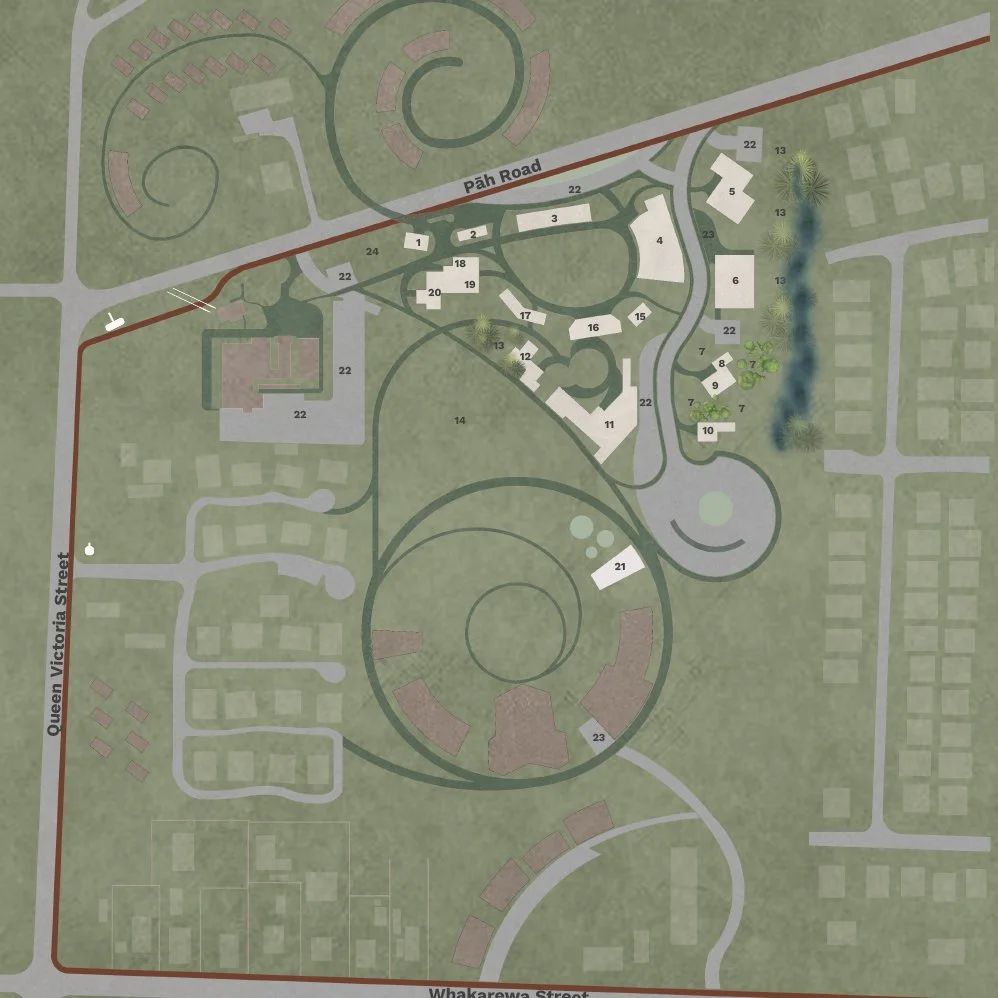
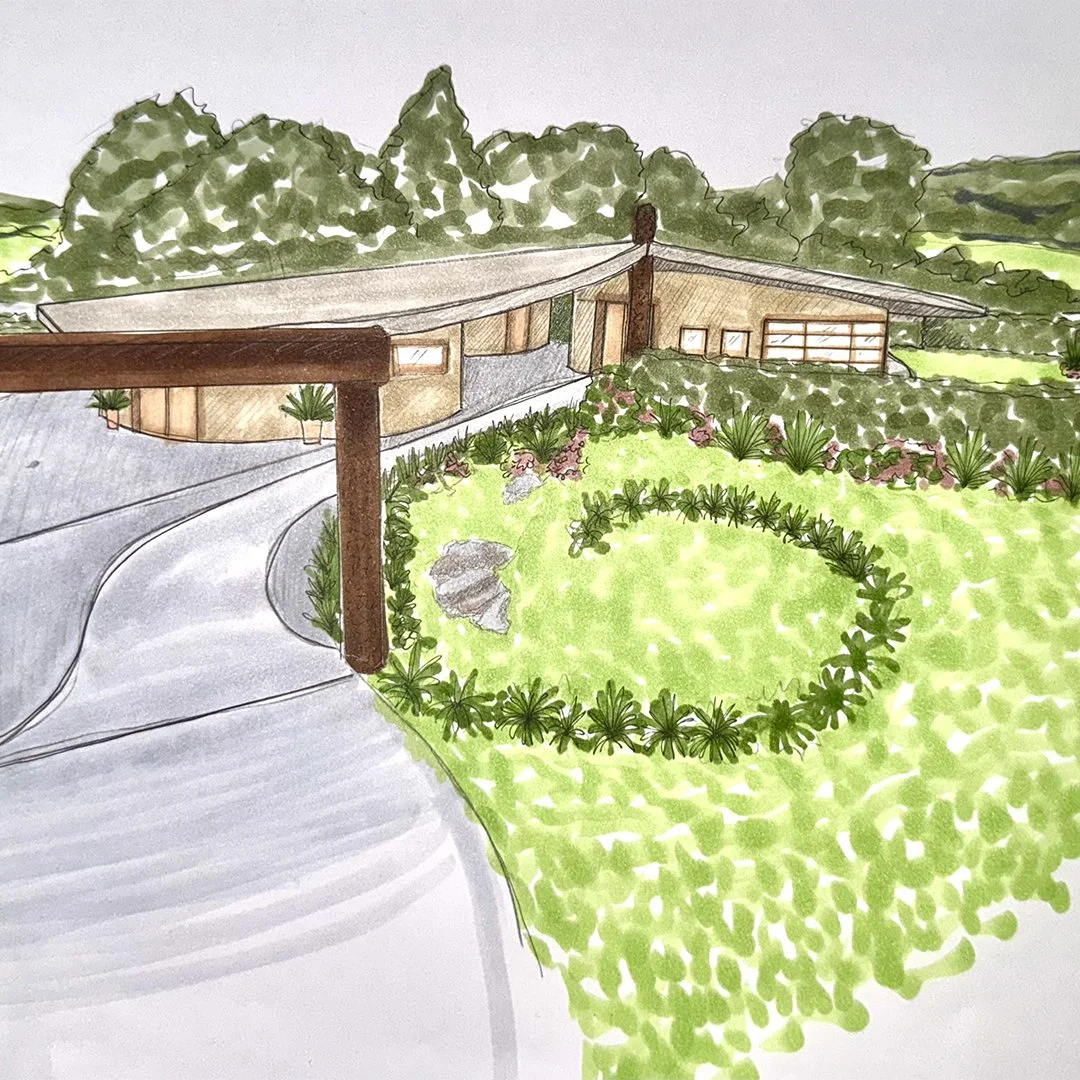
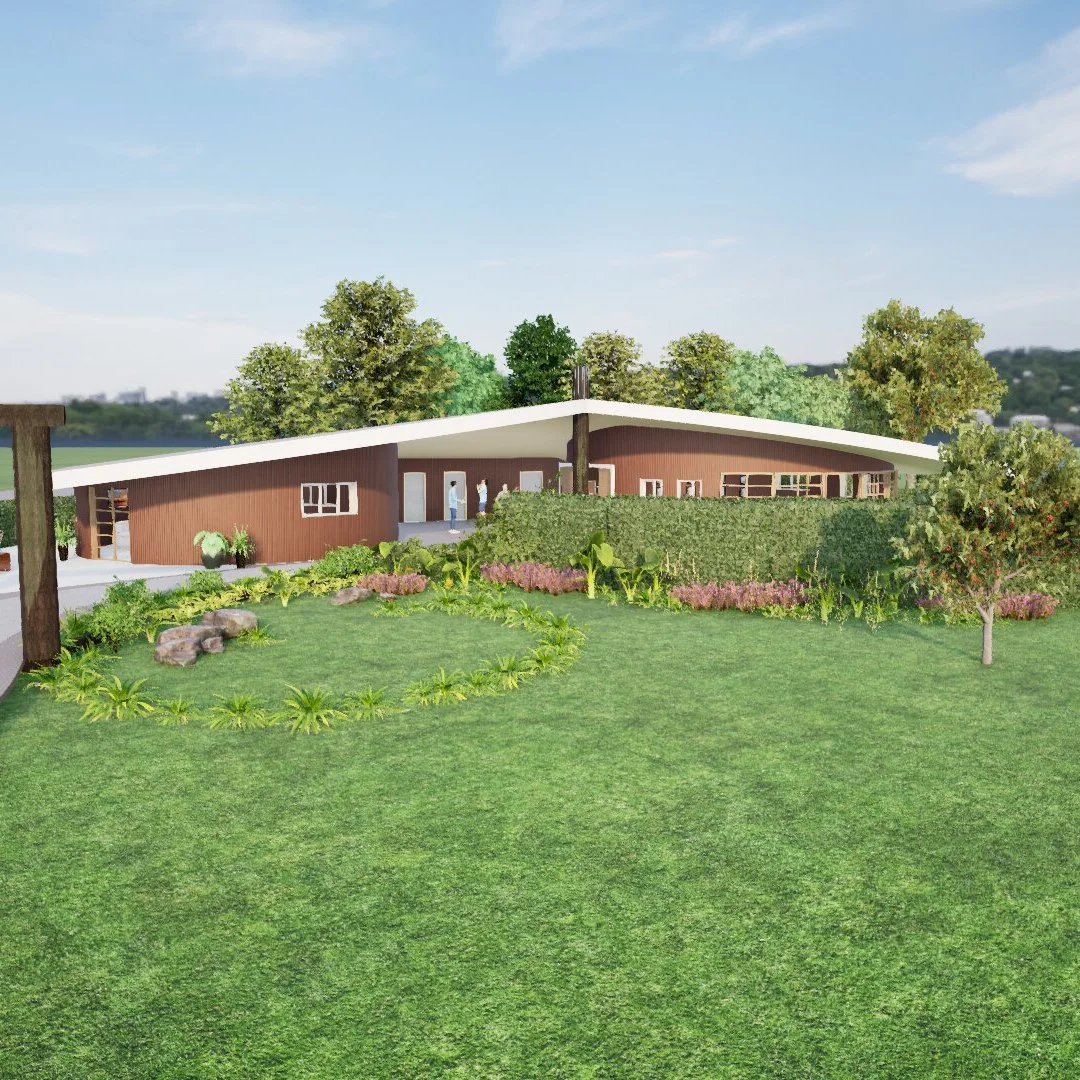
Claudia's work demonstrates this philosophy in action. Her concept for a Tā Moko Studio, which she designed as part of a Zone 2 Master Plan developed collaboratively with Taina Marie takes inspiration from a korowai, the protective woven cloak. The curved roof drapes over the whenua like fabric, with two circular forms representing the cloak's shoulders. Just as Tā Moko carries whakapapa, identity, and wairua, Claudia's architecture creates spaces of belonging where culture and design are inseparable. It's not decoration. It's DNA.
A new way of practicing
The scholarship didn't just ease financial pressure. It allowed Claudia to be fully present in a kaupapa that taught her when and how to integrate Māori perspectives from Stage 1 of the design process, not as an afterthought.
She now carries these questions into every project:
What existed here before?
What should still exist in 100 years?
How can this design honour the culture, the whenua, and the community it belongs to?
"As an aspiring architect, my role isn't to impose a vision, it's to facilitate, listen, and help translate the aspirations of mana whenua and community into built form."
This is exactly why CGF exists. To support, enable, and amplify the next generation of construction professionals who will build a more sustainable, cohesive, and culturally grounded sector for Aotearoa.
Congratulations, Claudia. We can't wait to see the spaces you'll help create.