
From a Pencil Sketch to a Full-Scale Training Structure: How GGINZ Built a New Zealand First for Complex Glazing
Structural glass fins, spider-fixed curtain glass walls, glass canopies, frameless balustrades and walk-on glass stairs are now common on New Zealand’s commercial buildings and high-spec homes, yet there was no formal training pathway for the people who install them. Glaziers learned this work on live sites, where mistakes are expensive, hard to put right and potentially dangerous. The Glass & Glazing Institute of New Zealand (GGINZ) set out to change that, creating a New Zealand first: a full-scale complex glazing training structure that recreates live site conditions. Built for the trades, by the trades, it gives glaziers a safe place to master this work before they face it on the job, and gives experienced installers who lack formal recognition a place to have their capability validated.
A qualification that needed somewhere to happen
Industry experts raised the gap with BCITO, leading to work with the Construction and Infrastructure Workforce Development Council (WDC) on a new Level 5 Certificate in Complex Glazing, now on the NZQA framework.
But almost none of this competence could be taught, or validated in experienced glaziers, in a classroom or on a workshop bench. Learners needed to handle full-size, heavy, engineered glass at height, on real fixings and real steel, and nowhere in New Zealand offered that outside a live construction site.
When we spoke with Verina Jones, Chief Executive, GGINZ, she said, “Without a training environment that matched real-world site conditions, the qualification risked staying on paper."
It started with a sketch
GGINZ Board member and complex glazing business owner Gary Walden, with principal tutor Frank Cole, drew the answer on a now well-known scrap of paper: one structure combining six elements of a real build, covering everything the job and the qualification require.
Leading glass engineer Rob Collis of RCCL turned the sketch into architectural plans, gifting engineering time. Fiona of Façade Design Services designed the glass configuration with Rob, and South Auckland Engineering built the steel frame, with some components weighing 240kg. Each element has its own producer statement (PS1) design package.
Inside the workshop
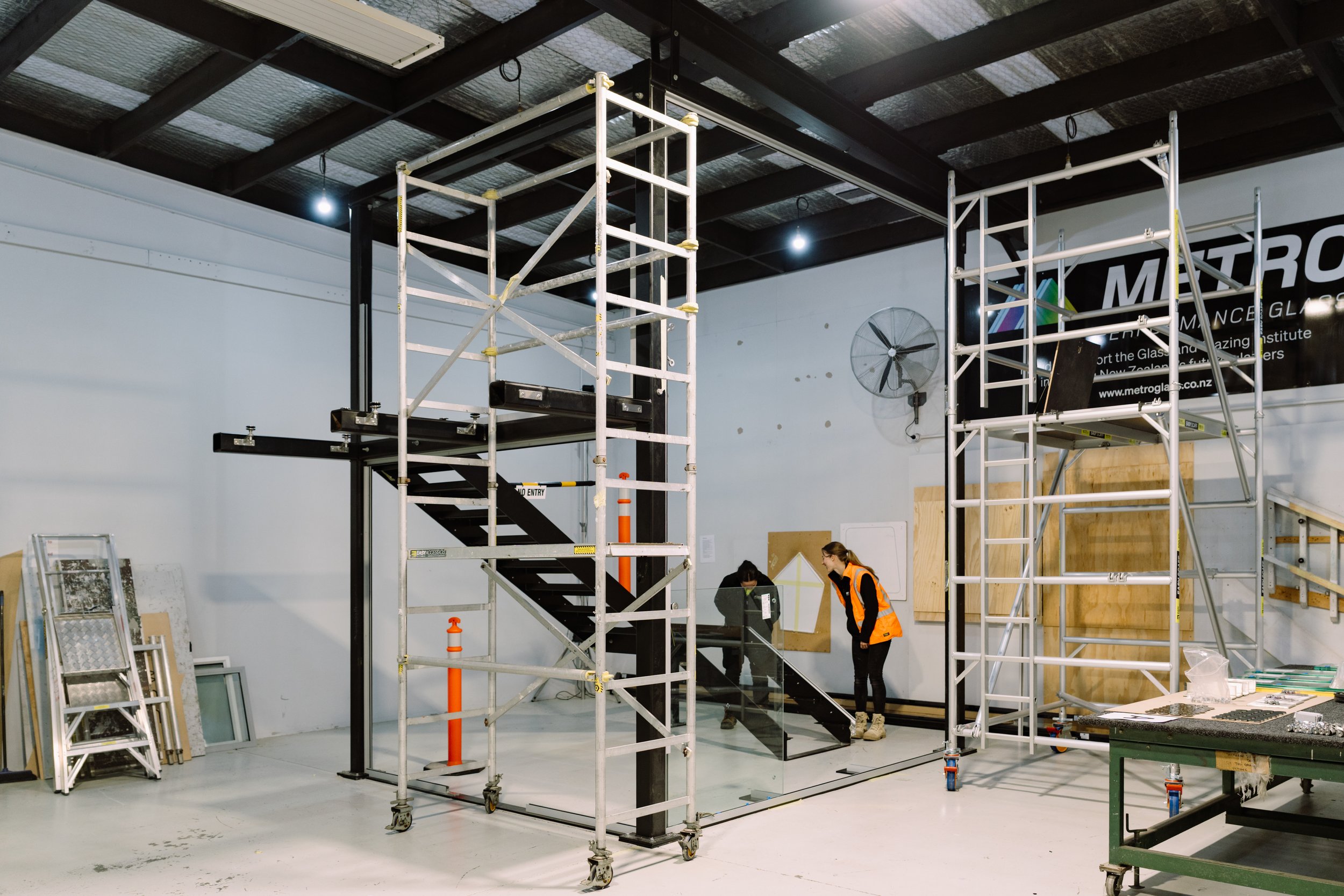
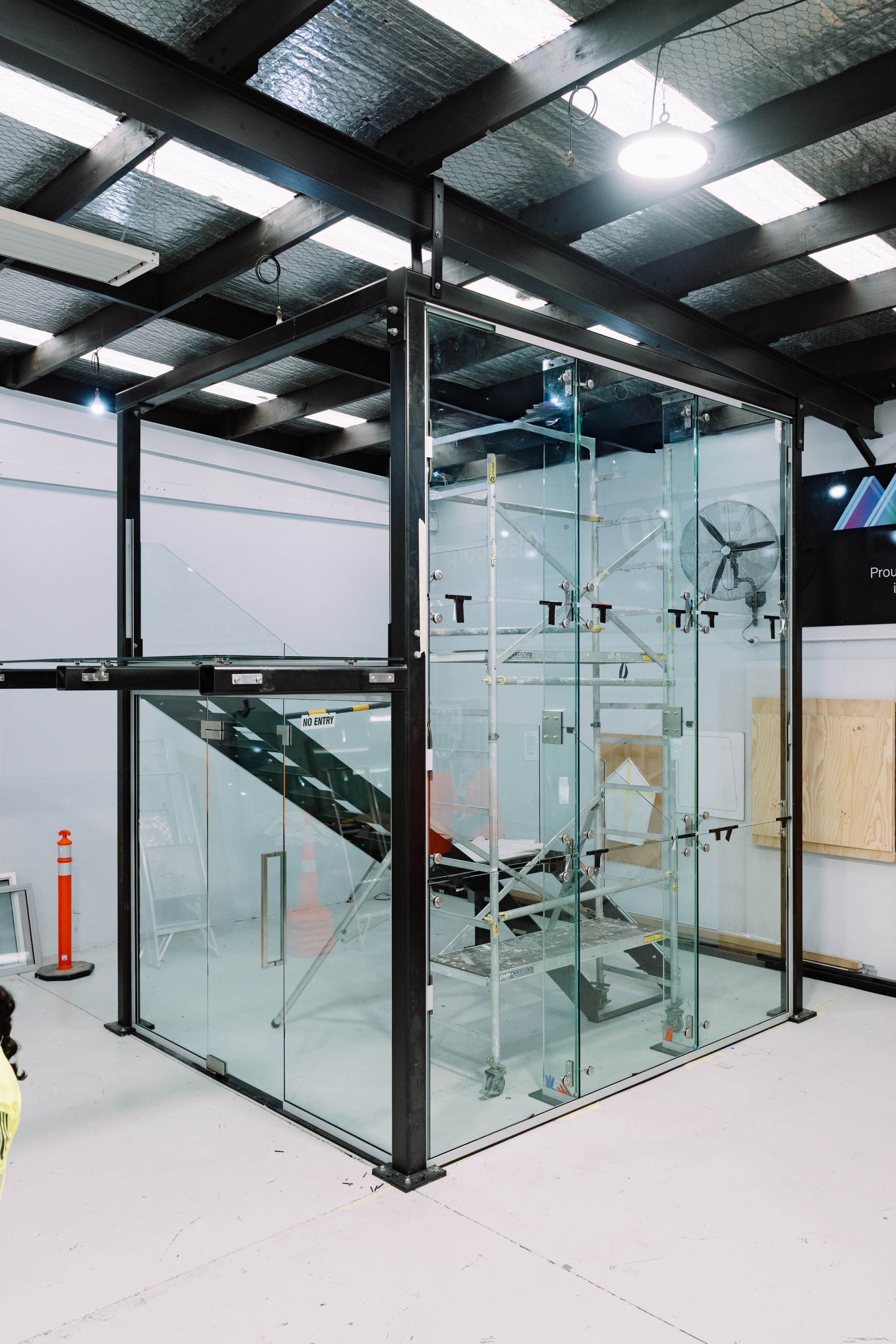
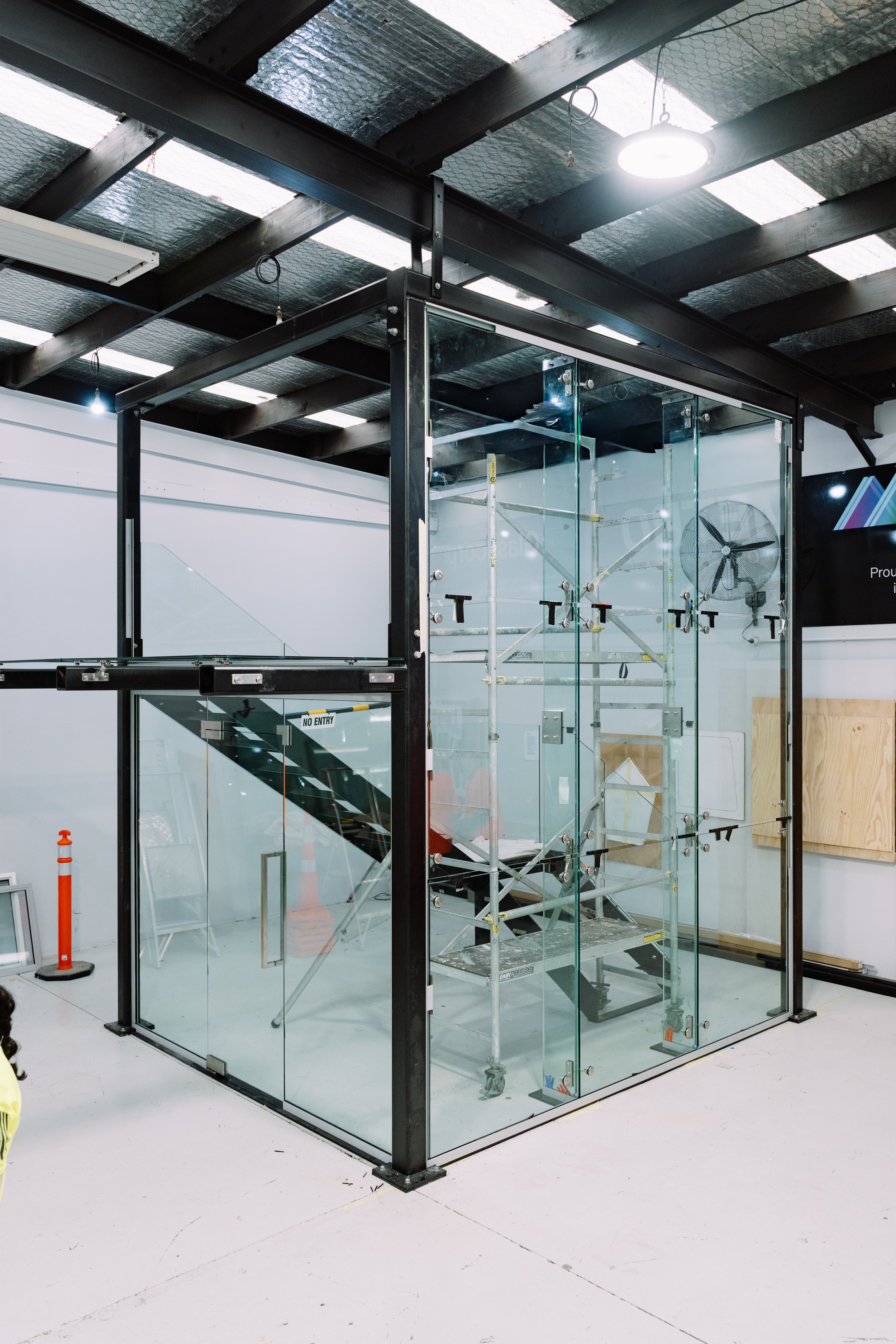
Bolted into the concrete slab of the GGINZ workshop in Plimmerton just as it would be on site, the finished steel-and-glass unit stands 5 metres high and 4.5 metres along each side. It includes:
a multi-level continuous frameless glass balustrade
walk-on glass stair treads and a glass floor landing
a stair barrier with disc (point) fixings
a multi-storey spider-fixed curtain wall with structural glass fins
a spider-fixed glass canopy
frameless retail shopfront walls with a pivot entrance door
Learners work from the same PS1s, run sheets and sign-off points used on a well-run commercial job, while tutors can stop, explain and repeat a task.
Competitors, side by side
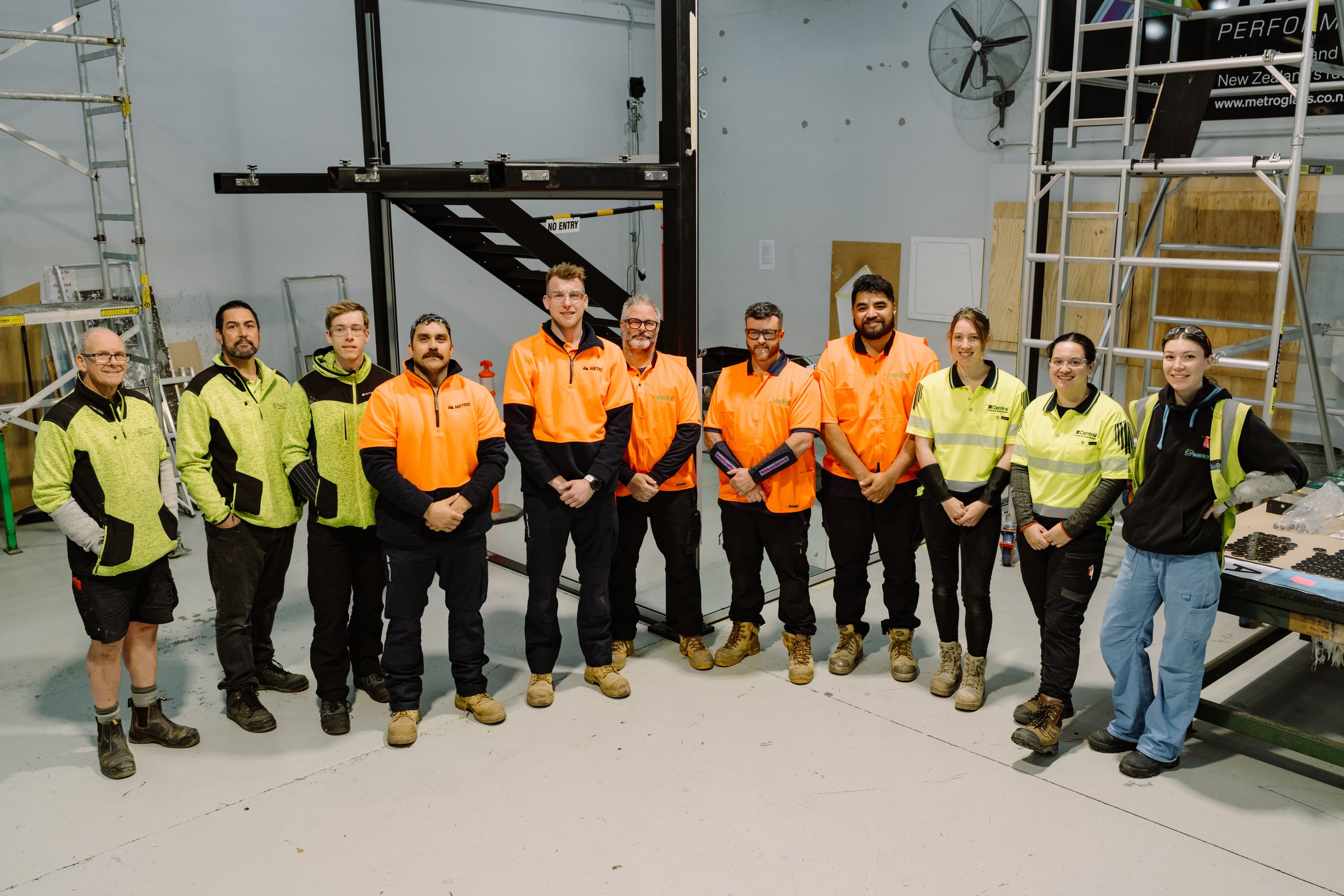
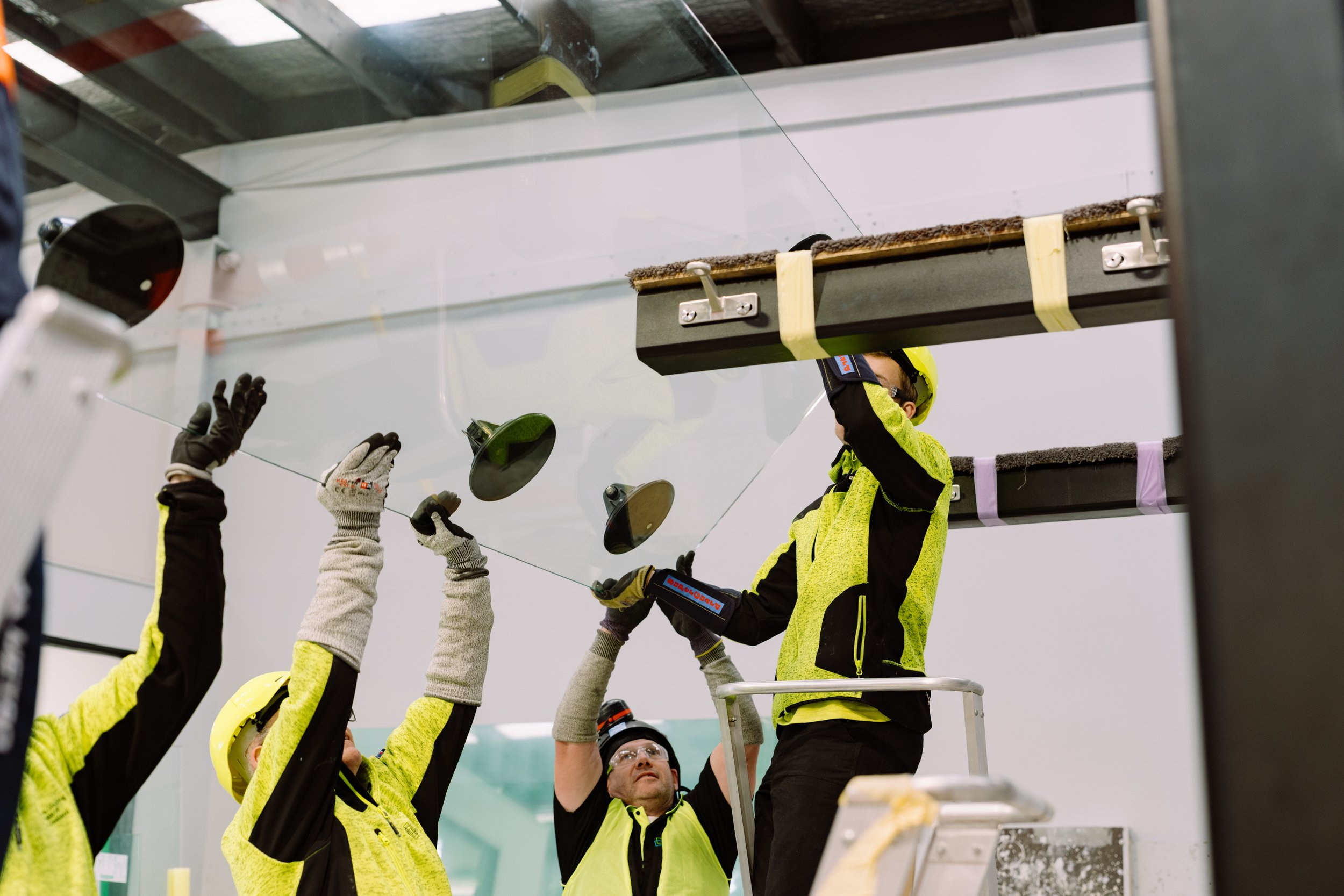
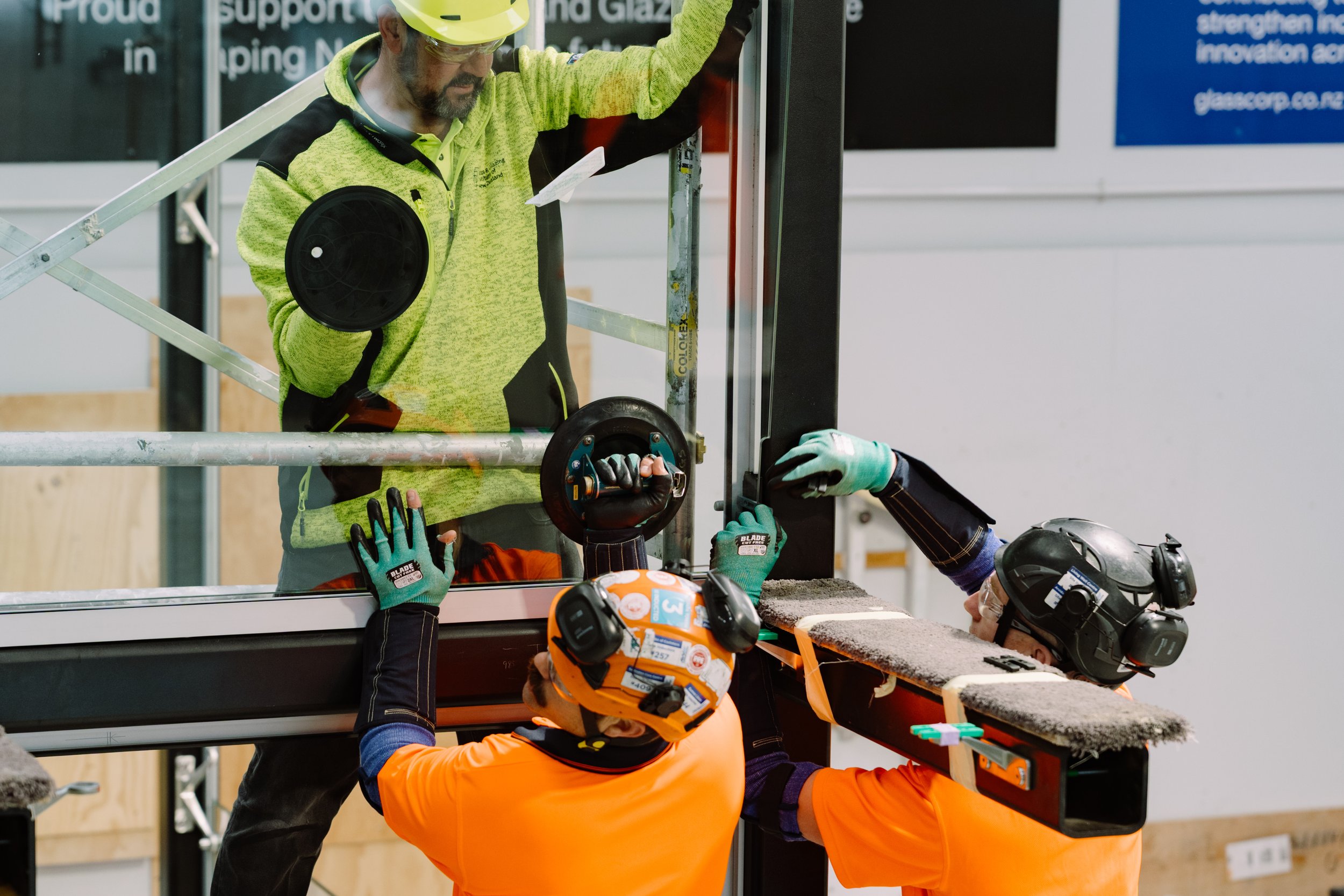
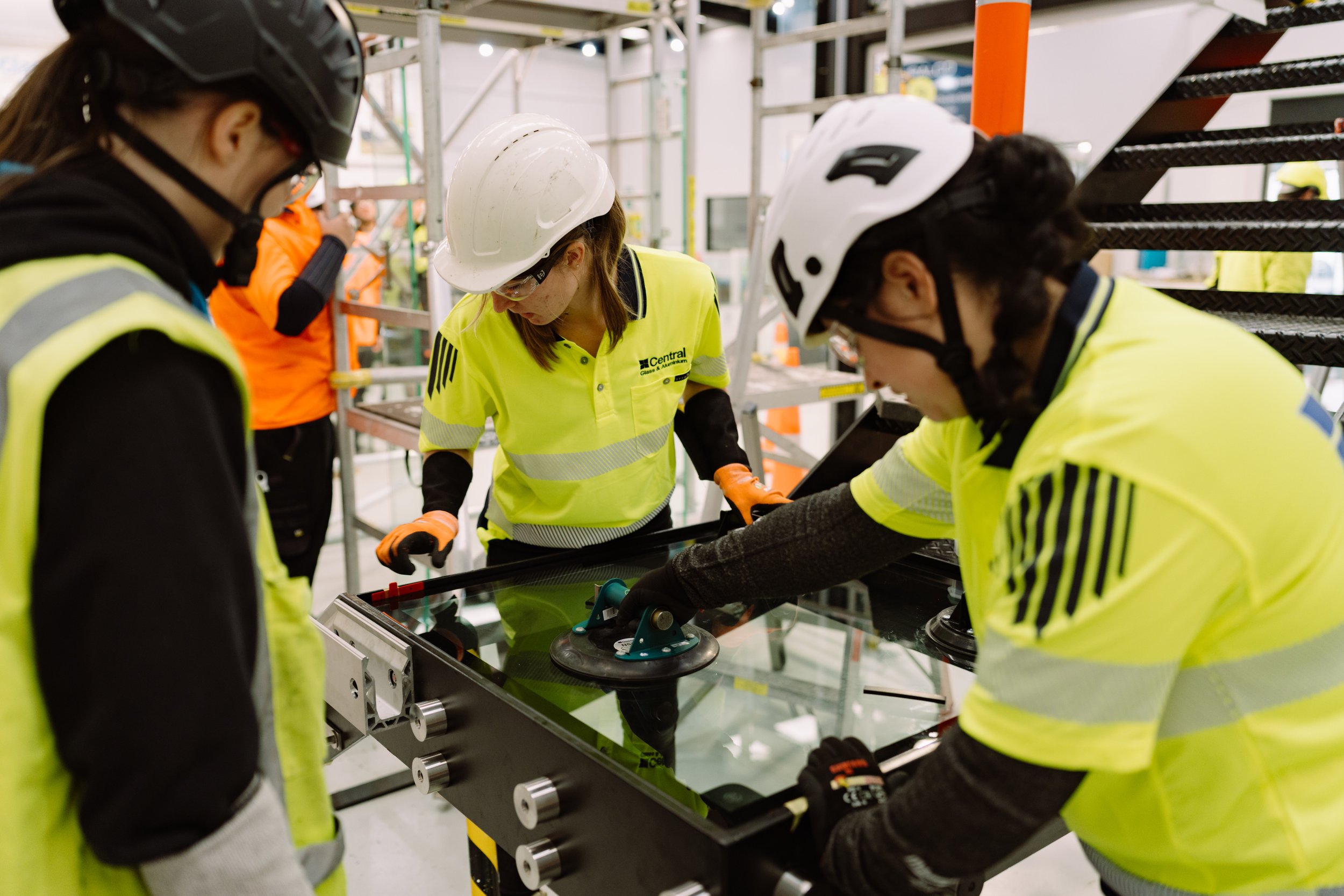
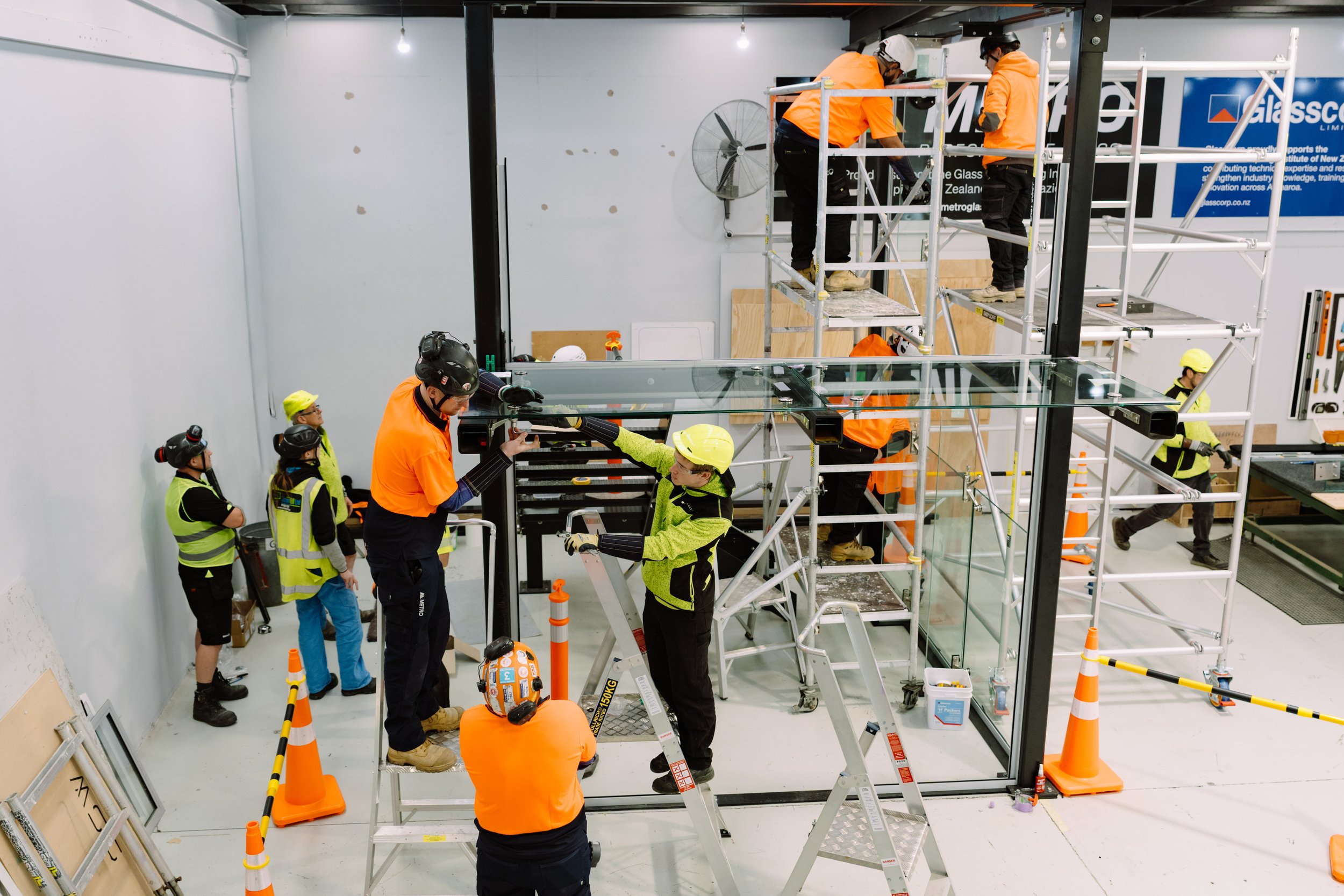
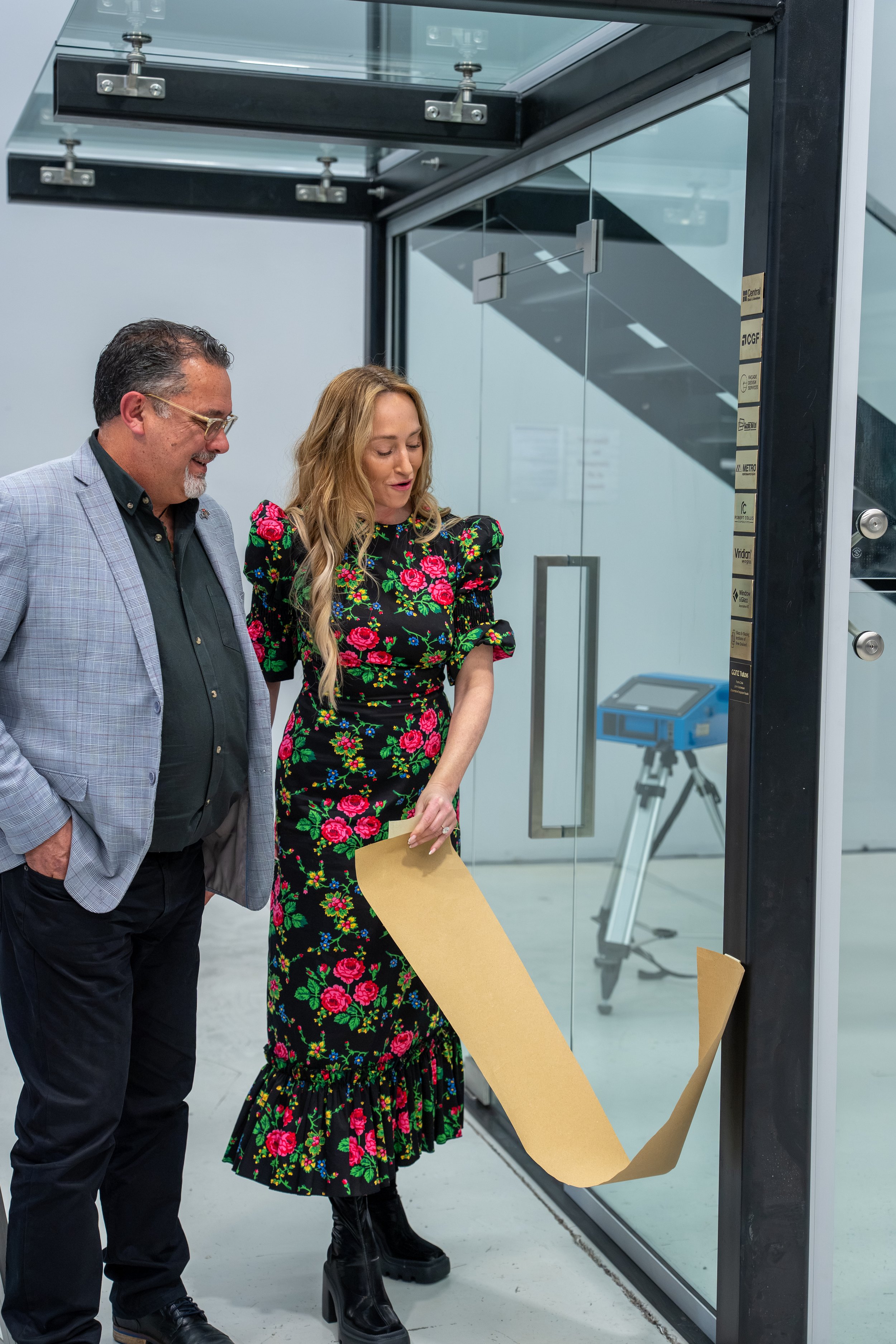
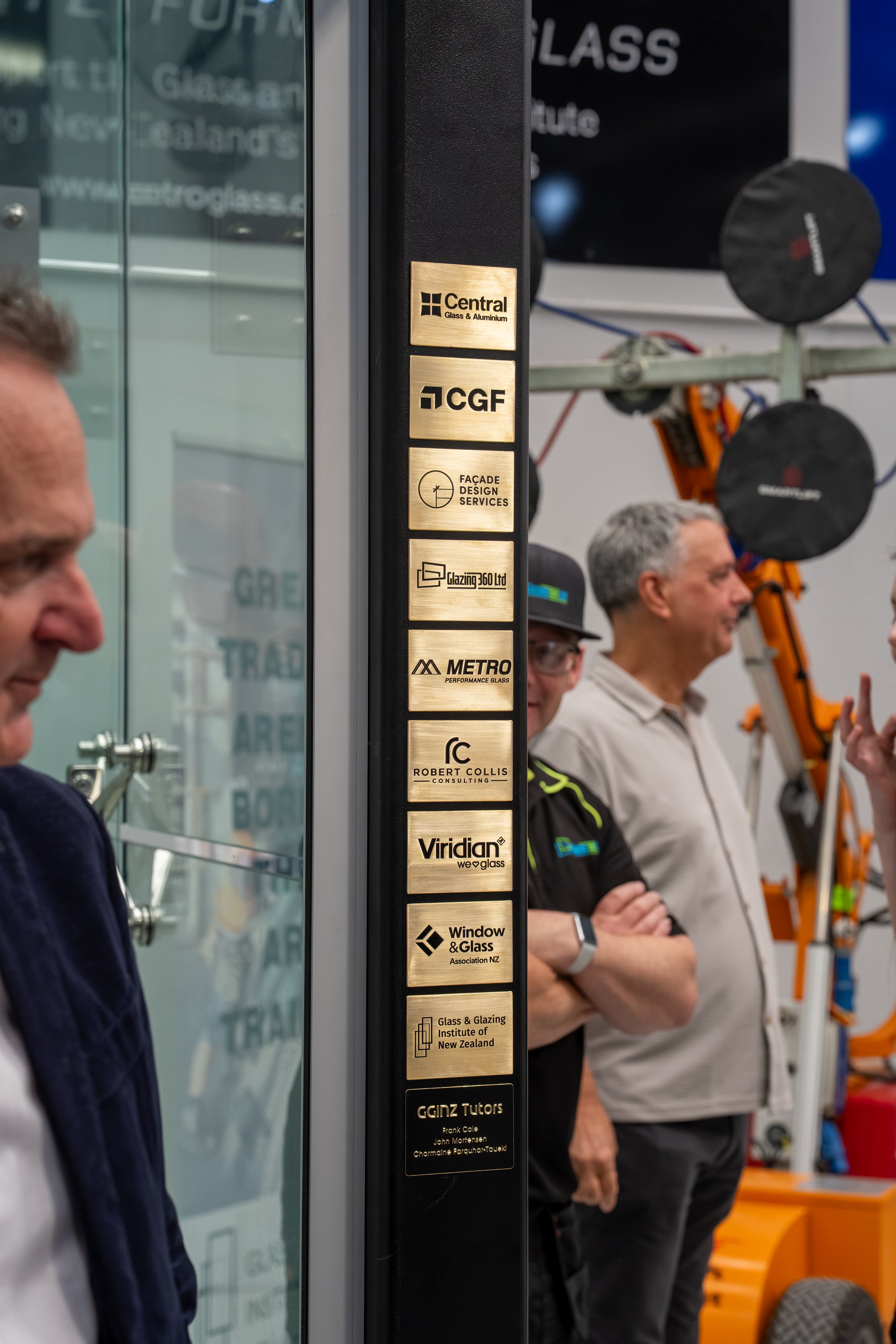
Viridian Glass and Metro Performance Glass donated the glass, and with Central Glass & Aluminium and Glazing 360, they installed it. These companies compete for the same work every day, yet here they worked from the same documentation to build one structure.
"When competitors agree on what 'good' looks like and build it together, the result carries the authority of the whole industry," said Verina.
At the first glaze, experienced glaziers worked alongside Level 4 qualified glaziers, Apprentice of the Year recipients and apprentice leaders, and one of the three teams was all female. The day also introduced scheduled fatigue checks, which participants have since adopted.
One glazier with 20 years' experience said he had to stop, review and adjust some elements exactly as he would on site, because floor and structural levels are never perfect. GGINZ Board members have since inspected the build and found it meets the standard PS3 and PS4 would require on site, and it fully meets the qualification's practical component.
What CGF funding made possible
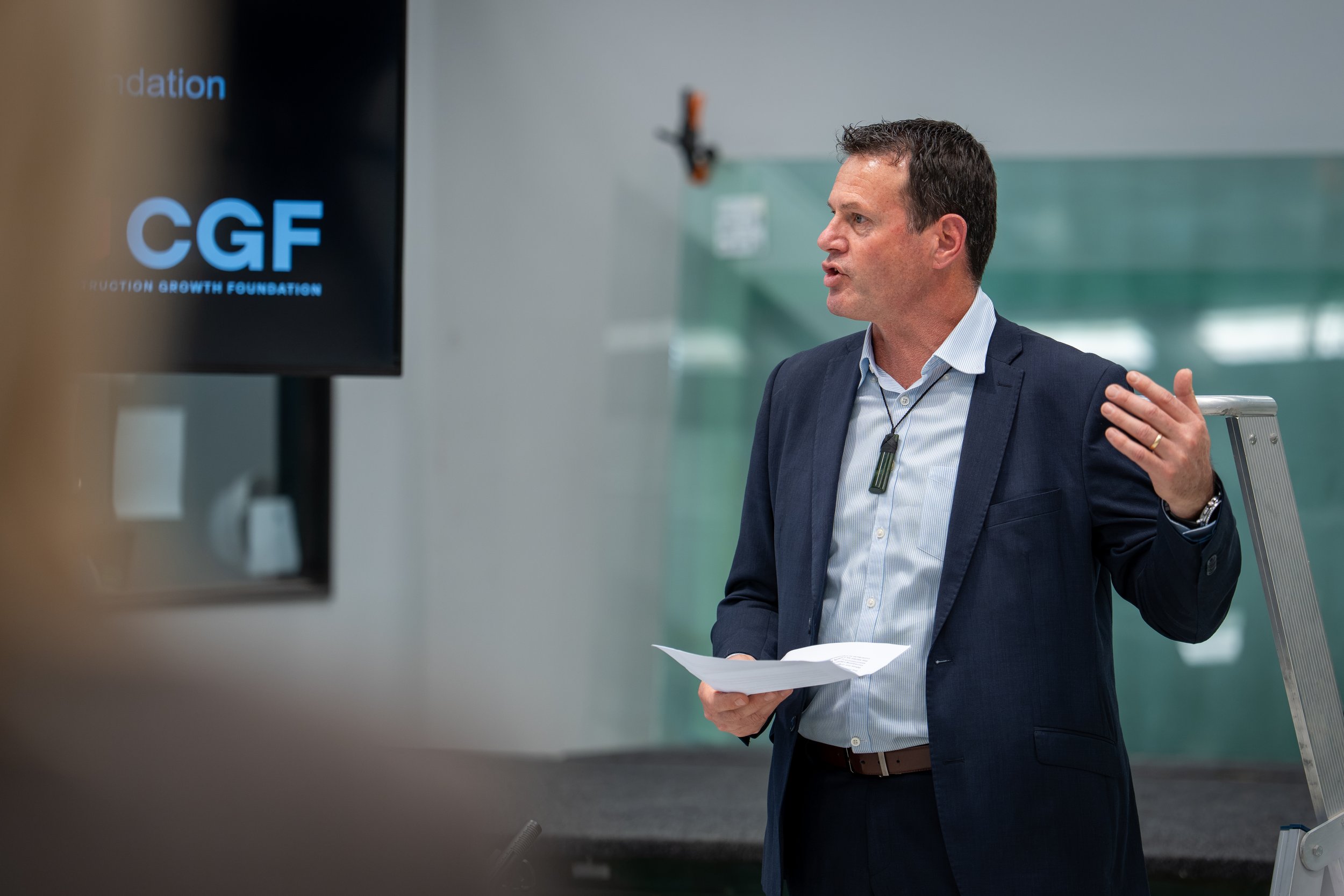
Glass and engineering time were donated, but hardware was not, and unforeseen costs emerged, including a forensic concrete assessment, seismic bracing and specialised steel drilling. CGF funding helped GGINZ turn a qualification and a sketch into a physical, engineered training facility, without those costs becoming a barrier.
Verina said, “CGF’s funding is an investment in New Zealand’s glazing workforce. It creates an advanced pathway for the most challenging work a glazier can do, one that both upskills glaziers and validates their capability. Industry gave generously, but some costs could only be met with funding. CGF’s contribution covered them and made sure the build went ahead.”
What comes next
GGINZ opened expressions of interest at its official launch on 8 October 2026 and is working through delivery models with BCITO. Training is designed for holders of the Level 4 glazing certificate, and for experienced glaziers seeking formal recognition for skills built over years of installs.
For employers, that means work done right the first time, and safer sites. For architects, engineers and main contractors, it means a trained, validated workforce they can specify with confidence. By backing projects like this, CGF is helping member associations build lasting capability that benefits the whole construction sector.
Find out more
To register interest in the Level 5 Certificate in Complex Glazing, contact Verina at GGINZ, verina@ggi.nz.