
Case Study: AWCI
Strengthening Seismic Safety: How the Construction Growth Foundation (CGF) Funding Supported the Association of the Wall and Ceiling Industry (AWCI) Code of Practice
When earthquakes strike, it's often not the building structure that causes the most harm; it's what's inside.
Internal walls, partitions and suspended ceilings can collapse, block escape routes, compromise fire safety, and render buildings unusable long after the shaking stops.
The Canterbury earthquakes (2010–2011) and the Wellington earthquake (2016) exposed a critical gap in New Zealand's construction system: while structural elements are tightly regulated, non-structural internal walls and partitions sit in a grey area, with no specific statutory requirements and no building consent required for their installation.
Yet failure of these elements can be fatal.
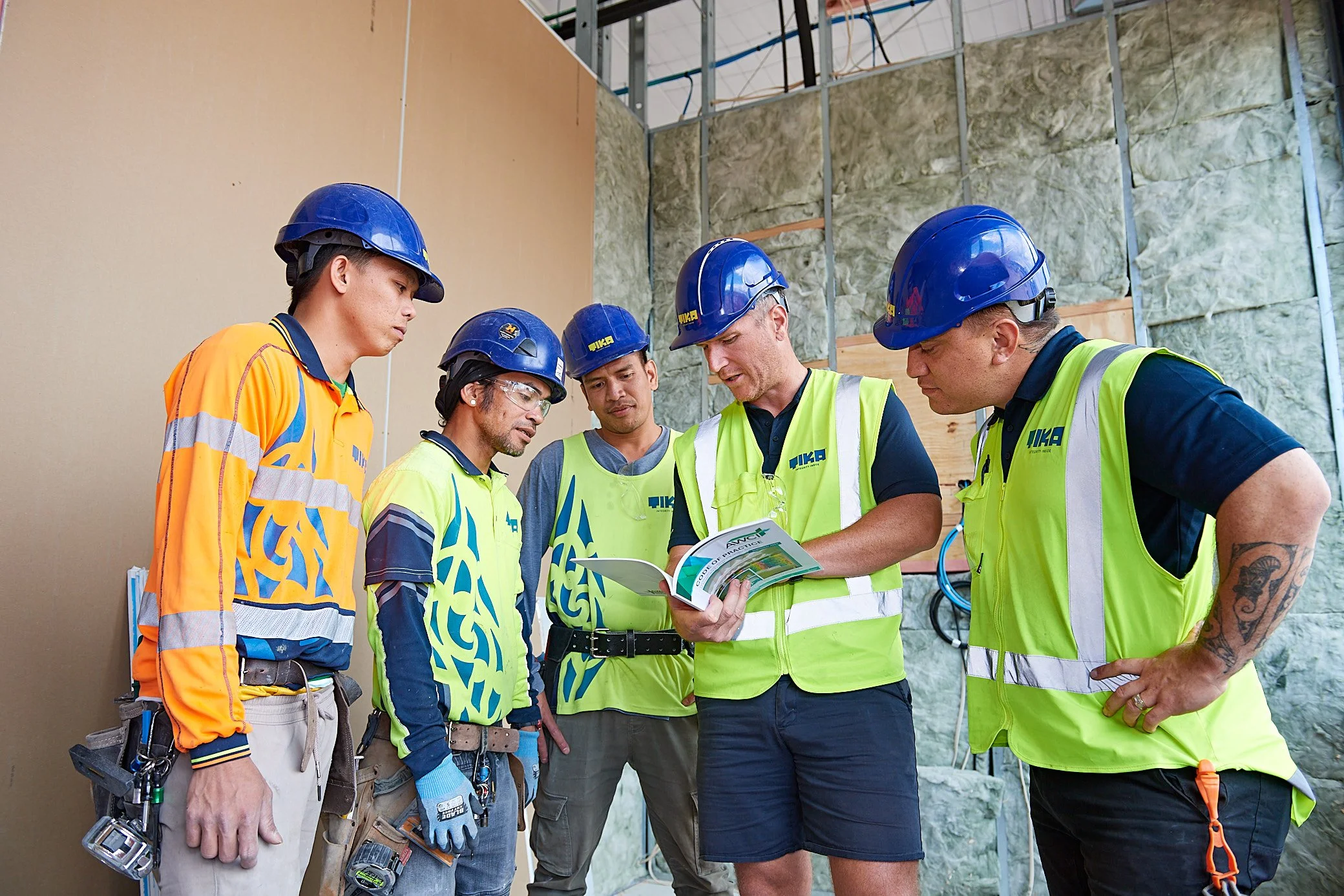
TIKA interiors ensuring best practice is followed on their latest job site https://www.tika.co.nz/
An Industry-Led Solution
Recognising this risk, the AWCI led the development of a comprehensive Code of Practice for the seismic design and installation of non-structural internal walls, partitions and suspended ceilings.
With support from CGF and key partners including the Building Research Association of New Zealand (BRANZ) and the Ministry of Business, Innovation and Employment (MBIE), this industry-led initiative has become a cornerstone of best practice across the sector.
Why CGF Supported This Project
CGF exists to strengthen capability across the construction sector, and not through regulation, but by enabling industry-led solutions that lift safety, quality and consistency.
The AWCI Code of Practice aligned squarely with CGF's strategic priorities:
Strengthening capability by improving technical knowledge and on-site practice
Building intelligence through clear, accessible guidance grounded in real-world construction
Amplifying influence by supporting a sector-led response to known safety risks
Most importantly, the project addressed a clear and well-evidenced problem: non-structural failures pose a serious life-safety risk and undermine building functionality after earthquakes, yet responsibilities for design and installation were often unclear or inconsistent.
What the Code of Practice Delivers
The AWCI Code of Practice provides practical, standardised guidance for the design and installation of non-structural internal walls, partitions and suspended ceilings so they can withstand light to moderate seismic movement without significant damage.
Key features include:
Clear roles and responsibilities
Flowcharts and guidance clearly define who is responsible: designers, engineers, installers, reducing gaps and assumptions that can lead to failure on site.
Alignment with modern seismic standards
The 2024 update aligns with NZS 1170.5 Section 8 and the National Seismic Hazard Model, ensuring industry practice reflects current seismic knowledge.
Improved life safety and egress
By reducing the likelihood of collapse, the guide helps keep escape routes clear and prevents loss of critical fire, acoustic and thermal performance.
Streamlined compliance for simpler projects
For certain ceiling systems (up to 144m²), the Code allows for non-specific design without requiring expensive Specific Engineering Design, reducing cost and consenting delays while maintaining safety.
Better documentation and accountability
Standardised templates, including PS3 Producer Statements, improve information provided to Building Consent Authorities and support consistent compliance.
Real Sector Impact
While the Code of Practice is voluntary, it is widely recognised as best practice.
Major suppliers such as GIB® and Potter Interior Systems reference it in their technical literature, and Building Consent Authorities frequently rely on it when assessing seismic design for ceilings and partitions.
Industry feedback has been strong. Engineers, designers and installers report greater clarity, improved coordination, and fewer grey areas between design intent and on-site delivery. Government agencies have also acknowledged the value of industry stepping up to develop practical guidance that complements Building Code requirements.
Why This Matters for the Construction Sector
This project demonstrates what's possible when industry identifies a real risk and leads the solution.
By supporting the AWCI Code of Practice, CGF helped enable:
Safer buildings and reduced risk to occupants
Greater resilience and faster post-earthquake recovery
Improved professionalism and consistency across the interior systems sector
Reduced rework, delays and avoidable costs
It's a clear example of how CGF funding is used to strengthen the construction sector as a whole; not just individual organisations.
As New Zealand continues to face seismic risk, initiatives like this ensure the industry is better prepared, better aligned, and better equipped to protect lives and keep buildings functioning when it matters most.